Odorous house ant eradication in Bellevue requires understanding the specific biology of Tapinoma sessile , known locally as sugar ants. These pests establish supercolonies containing thousands of workers and hundreds…
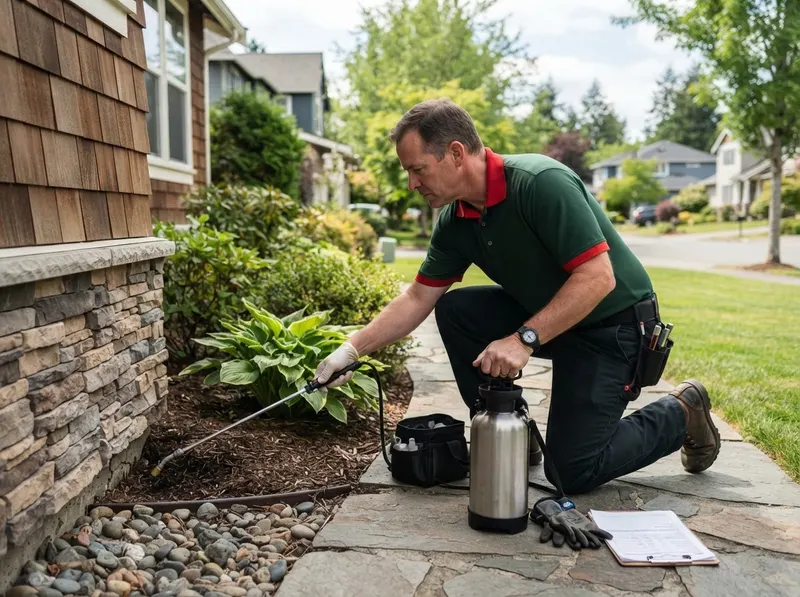
Odorous house ant eradication in Bellevue requires understanding the specific biology of Tapinoma sessile, known locally as sugar ants. These pests establish supercolonies containing thousands of workers and hundreds of reproductive queens. When homeowners apply standard over-the-counter contact pyrethroids from local hardware stores, the colony senses acute chemical mortality and undergoes budding, multiplying from a single entry point into five distinct interior satellite nests within days. In Bellevue's maritime microclimates, where wet winters and warm springs accelerate vegetation growth, ants enter structures in search of complex carbohydrates, nesting beneath insulation and around damp framing. Guidance from the Center for Integrated Pest Management highlights that true eradication relies on slow-acting, non-repellent formulations that foragers carry deep into the nest, distributing the active ingredient directly to reproductive queens through trophallaxis before the colony detects a threat.
Local architectural features throughout Bellevue dictate specific treatment strategies. In older mid-century homes throughout Somerset, Enatai, and Factoria, mature landscaping and crawlspace vents frequently allow exterior foragers to bridge the distance from moist yard mulch to indoor plumbing chases. In higher-elevation, heavily wooded tracts across Cougar Mountain, Lakemont, and Bridle Trails, fallen organic matter and dense salal create sustained moisture reservoirs alongside siding. The Washington State Department of Agriculture regulates pest management protocols to ensure structural barriers do not impact local groundwater systems, which is especially vital near sensitive hydrological zones such as Mercer Slough Nature Park, Meydenbauer Bay Park, and Kelsey Creek Farm. Furthermore, guidelines maintained by the Public Health - Seattle & King County agency confirm that controlling structural moisture and interior food attractants reduces vector risks without compromising residential air quality.
Effective defense involves a systematic, three-phase operational workflow:
1. Technicians map primary foraging freeways along baseboards, subflooring, and foundation perimeters using thermal diagnostics to locate damp voids without puncturing drywall.
2. Targeted sweet and protein-based matrix baits utilizing non-repellent chemistries approved by the United States Environmental Protection Agency are placed directly inside structural wall voids, out of reach of household pets and children.
3. Technicians complete non-repellent residual applications along exterior stem walls, coupled with structural branch clearance adhering to structural clearance recommendations from the United States Forest Service, breaking the physical bridges ants use to bypass chemical zones.
Choosing professional bait-transfer protocols over short-term perimeter barrier spraying represents a deliberate operational trade-off. Immediate contact sprays kill 20 to 50 visible workers on a kitchen counter instantly, providing temporary visual relief, yet they leave the reproductive core intact, leading to renewed indoor foraging within 10 to 14 days. Conversely, scientific micro-baiting requires 7 to 21 days for full colony collapse as workers transport the active agent to subterranean queens, delivering complete eradication across the entire property envelope rather than masking symptoms. For homes along West Lake Sammamish, Newport Shores, Crossroads, and Wilburton, this structural exclusion strategy minimizes indoor chemical exposure while securing the home against reinvasion.
Every job gets a firm, written price after a free on-site visit.
For standards, safe disposal, and service guidance on PEST CONTROL SEVICE in Bellevue, WA, useful references include U.S. EPA, ENERGY STAR, U.S. Dept. of Energy, Consumer.gov, U.S. Census Bureau, and Google Maps. General consumer and small-business resources are available from USA.gov, Better Business Bureau, FTC Consumer Advice, U.S. Small Business Administration, and Ready.gov.
Tell us about your odorous house ant eradication job in Bellevue and we'll send a clear, written quote, usually the same day.
 Redwood Bug Services