Redwood Bug Services provides systematic pest control service Bellevue homeowners rely on for quiet living spaces and preserved crawlspaces. Residential architecture across King County faces distinct biological pressures from temperate rainforest moisture and surrounding native timber stands.
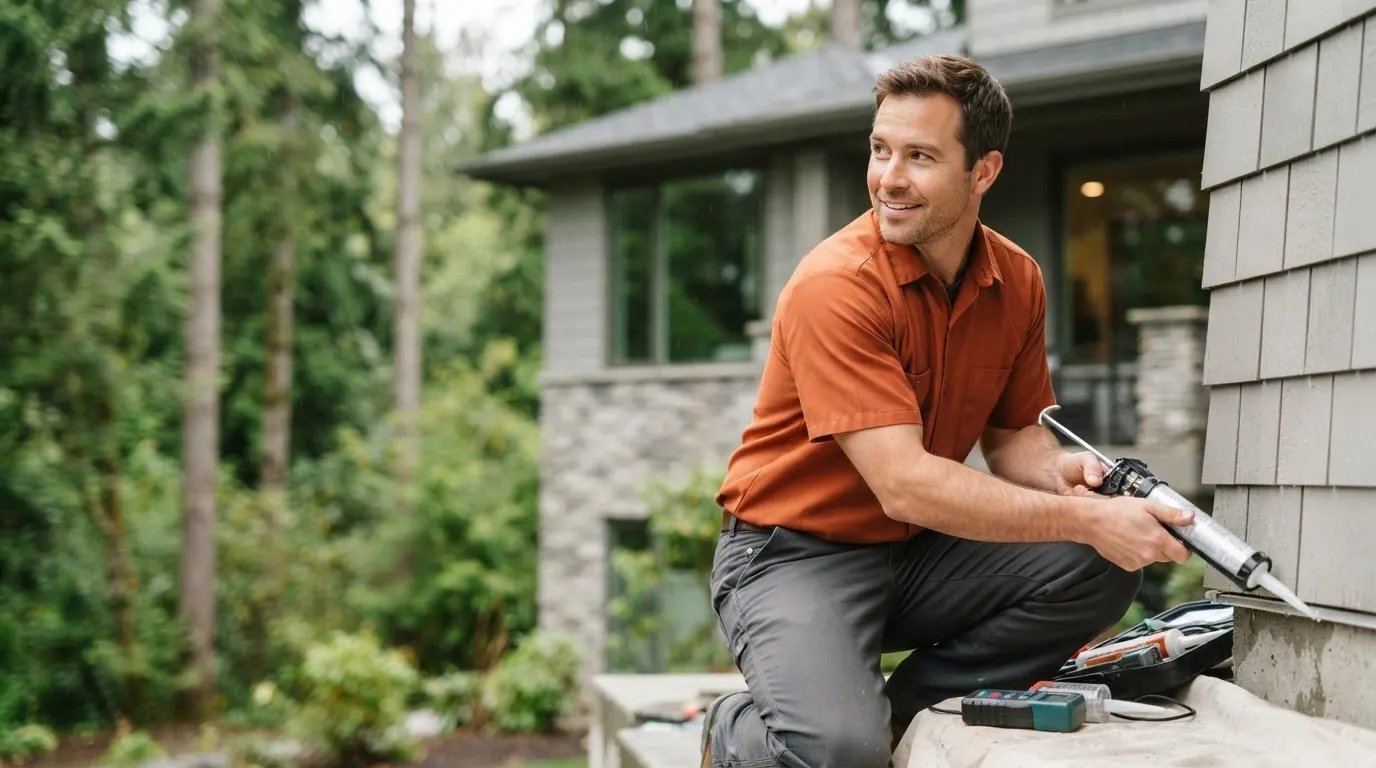
A pest control service in Bellevue is an integrated environmental health protocol that identifies wood-destroying organisms, invasive insects, and structural rodents to remediate populations using targeted exclusion barriers and localized applications.
Every service reflects the same meticulous attention to detail, whether it's a single job or a larger pest control sevice project across Bellevue.
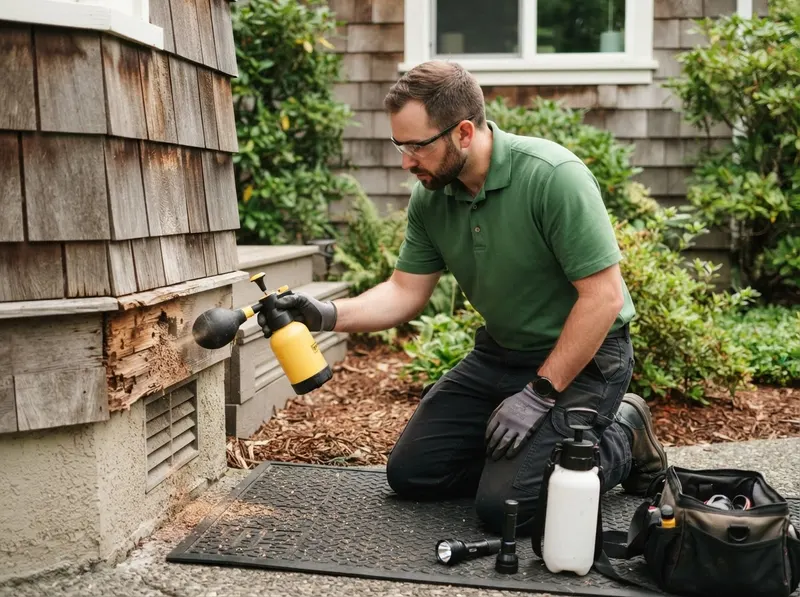
Carpenter ant management focuses on detecting primary parent colonies inside damp structural lumber and eliminating satellite nests hidden inside insulated wall voids. Technicians use acoustic listening tools and thermal detection to locate active galleries in rim joists, top plates, and window headers. Technicians apply targeted non-repellent compounds that worker ants transfer systematically to the queen, halting structural wood excavation without off-gassing into bedrooms. All treatments conform to structural standards established by the National Pest Management Association .
Get a quote →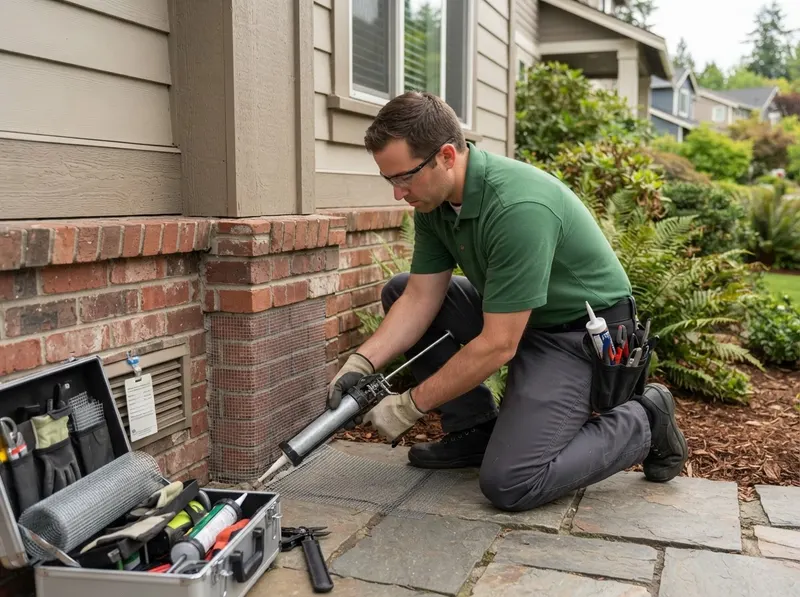
Rodent exclusion secures residential architecture against roof rats and Norway rats by sealing crawlspace vents, pipe collars, roof transitions, and foundation weep holes with 23-gauge galvanized wire cloth and non-toxic polyurea metal-reinforced sealants. Every entry larger than one-quarter inch is mechanically secured to ensure persistent physical separation from living quarters. Our team installs heavy-gauge chimney spark arrestors, chew-proof door sweeps along garage entrances, and metal flashing along fascia boards following municipal structural recommendations from the Public Health Seattle and King County Environmental Health Division .
Get a quote →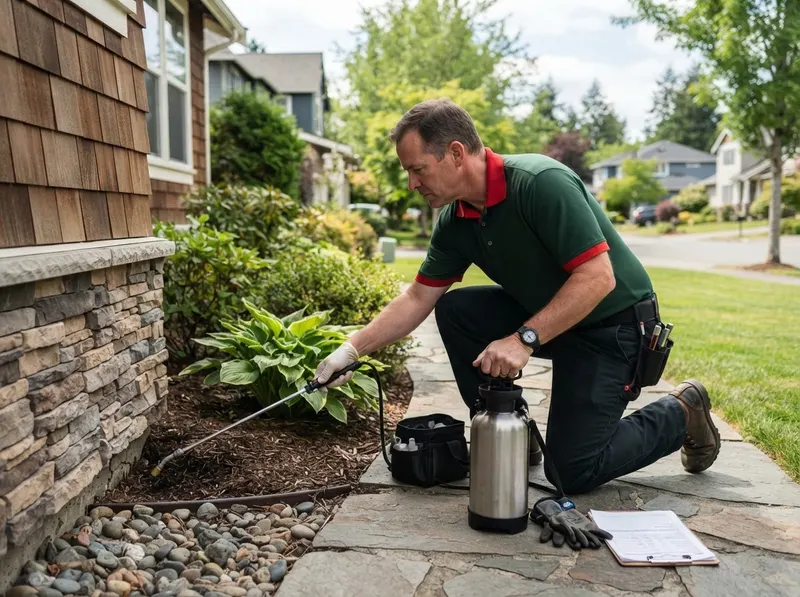
Odorous house ant elimination eradicates indoor foraging trails by deploying undetectable transfer chemistries engineered for foraging workers to ingest and share horizontally with queens and developing larvae. The approach prevents defensive budding behaviors, extinguishing multiple hidden queen nests located beneath subflooring, wall insulation, or adjacent paver patios. Technicians inspect plumbing wall penetrations, window casings, and landscape edging to identify moisture trails, applying non-repellent fipronil formulations strictly governed by the Washington State Department of Agriculture Pesticide Management Division .
Get a quote →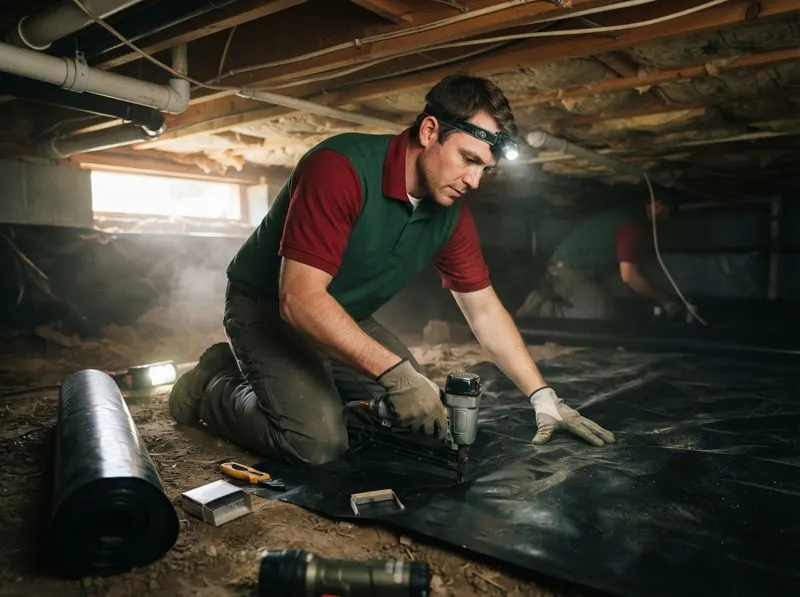
Crawlspace environmental remediation addresses torn ground covers, damp fiberglass insulation, and rodent bio-contaminants that draw wood-boring beetles, subterranean moisture ants, and silverfish. Technicians clear contaminated droppings, extract soiled batting, replace subterranean vapor barriers with reinforced 10-mil polyethylene sheeting, and apply localized antimicrobial enzyme mists to sanitize structural timber. This restoration adheres directly to damp crawlspace guidelines outlined by the U.S. Department of Energy Building Technologies Office to preserve subfloor structural integrity.
Get a quote →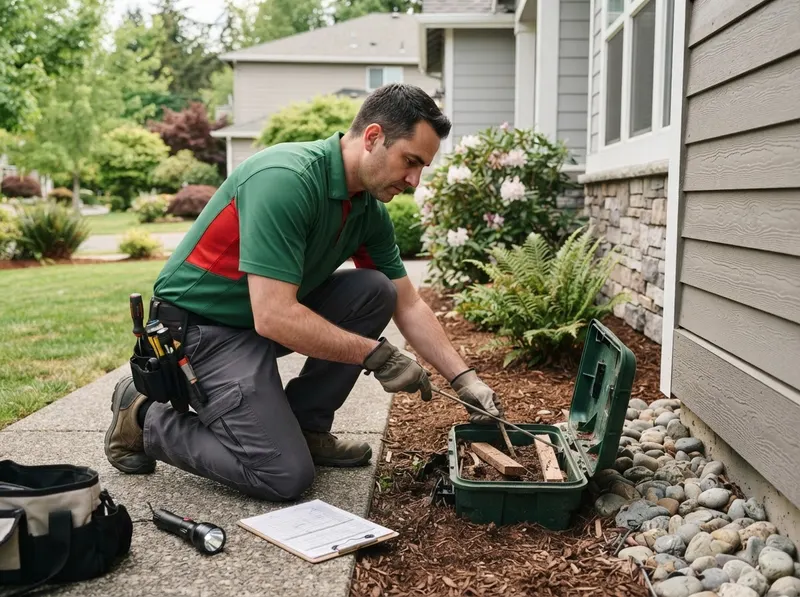
Termite defense establishes an exterior below-ground detection and mitigation network using low-profile cellular stations situated along structural drip lines every 10 to 15 linear feet. The system intercepts subterranean worker termites before mud tubes reach foundation sill plates, utilizing bait matrices containing chitin synthesis inhibitors that arrest insect molting cycles. Regular electronic sensor tracking monitors subterranean activity without digging disruptive trenches through ornamental plantings, adhering strictly to technical parameters approved by the United States Environmental Protection Agency .
Get a quote →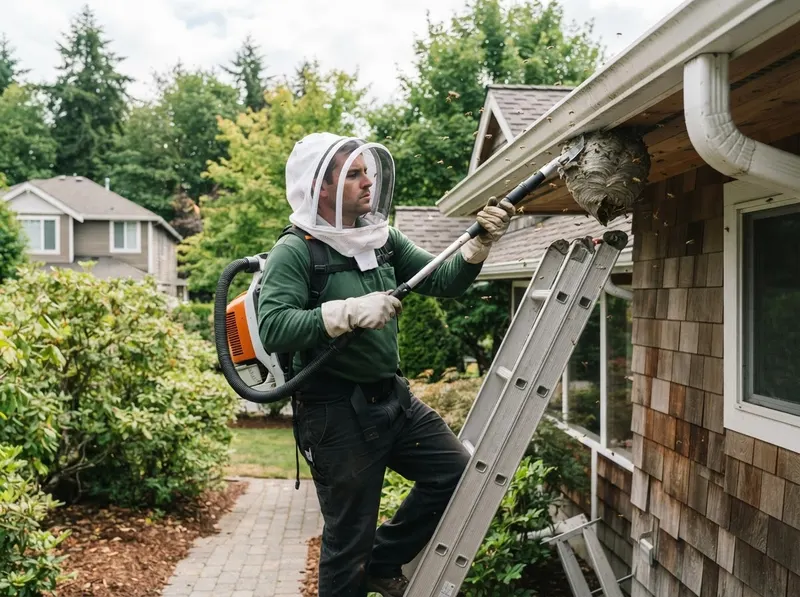
Stinging insect eradication neutralizes bald-faced hornet aerial structures, subterranean yellowjacket hives, and paper wasp clusters situated under eaves, deck footings, or dormer returns. Direct void treatments eliminate defensive insect populations safely using closed-system directional delivery, followed by the physical removal of the comb to prevent secondary carpet beetle and dermestid infestations. Treatments protect outdoor spaces during high-risk summer months in accordance with pollinator safety regulations established by the Pollinator Partnership .
Get a quote →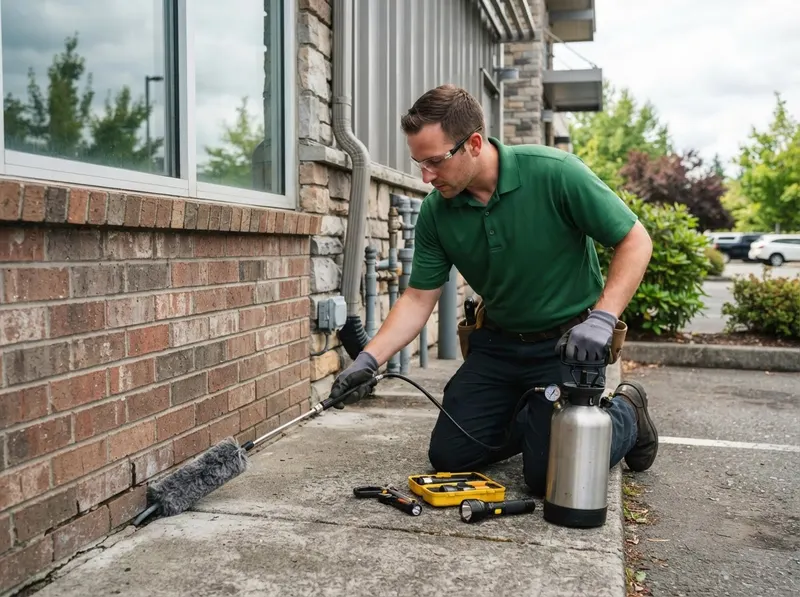
Commercial pest defense provides documented integrated pest management compliance for retail properties, office campuses, food service establishments, and medical facilities across Bellevue commercial zoning districts. Scheduled electronic inspection logs track exterior monitoring stations, structural seals, interior glue boards, and sanitation factors to prevent inventory loss and meet regulatory audit criteria. Protocols follow the commercial safety practices detailed by the Occupational Safety and Health Administration to maintain safe workplace conditions for commercial staff.
Get a quote →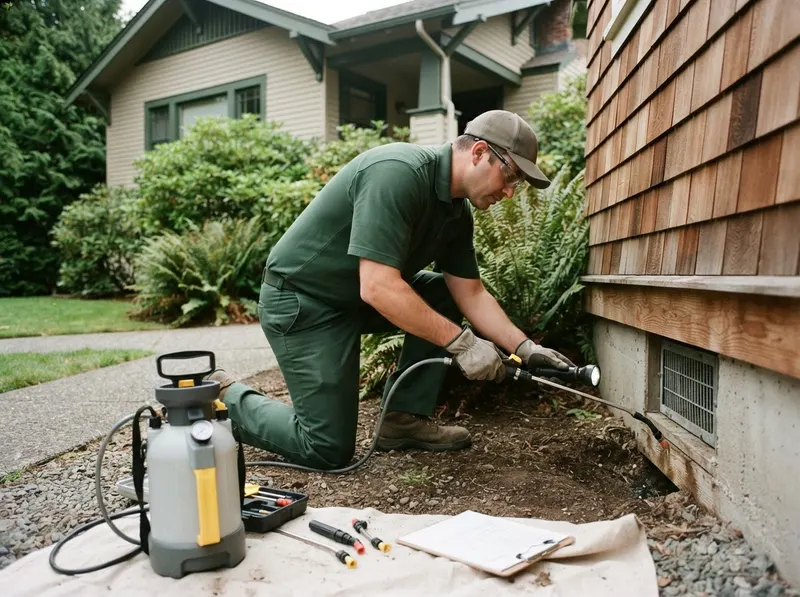
Moisture ant intervention targets yellow and brown moisture ants that colonize wet, fungal-decayed timbers around plumbing stacks, flat roofs, crawlspaces, and exterior decks. Service involves pinpointing subterranean fungal moisture sources, treating affected wall voids with desiccating borate dusts, and guiding the repair of water leaks that sustain the infestation. Field protocols adhere to moisture diagnosis protocols maintained by the Washington State University Extension Hortsense System to prevent long-term structural wood rot.
Get a quote →You get a firm, itemized quote for your pest control sevice before any work begins, no surprises, no pressure.
Careful prep, tidy work, and a full cleanup when we are done. We treat your home and belongings like our own.
The same trusted, background-checked team from the first call to the final check.
Selecting appropriate intervention protocols depends on the pest biological classification, the level of structural penetration, and the exterior building materials. If structural framing shows soft wood shavings or hollowed timbers near foundation posts, select specialized carpenter ant structural remediation rather than topical perimeter sprays, because surface repellents cause satellite colonies to scatter deeper into wall cavities. If rustling or scratching sounds occur inside ceilings or crawlspaces after sunset, prioritize mechanical rodent exclusion and crawlspace vapor defense over standalone exterior baiting; perimeter bait boxes manage population density outdoors, but mechanical closure using heavy gauge steel mesh is the only measure that stops roof rats from re-entering attics.
If small black ants create trails on kitchen counters or window tracks, apply slow-acting non-repellent liquid transfer baits instead of fast-acting grocery store pyrethroid sprays; the fast-acting sprays fracture the parent colony through budding, multiplying active nests from one to four within three weeks. For stinging insect clusters hanging beneath roof decking or soffits, implement targeted directional aerosols that neutralize the nest immediately, whereas subterranean yellowjacket colonies inside landscape beds require precision deep-void dust treatments to extinguish subterranean galleries. The trade-off between physical mechanical exclusion and ongoing chemical suppression involves long-term durability versus immediate upfront expense: mechanical barrier exclusion requires physical labor to seal crawlspace penetrations and replace damaged mesh screens, but it permanently blocks mammalian pathways without chemical reapplications.
When subterranean termites threaten structural mudsills, below-ground baiting arrays provide perimeter colony suppression over 12 to 36 months, whereas direct liquid trenching delivers immediate soil barriers; property owners balance the slower, complete elimination of exterior termite colonies against the localized barrier trenching that disrupts ornamental landscaping. When managing nuisance spiders around architectural window banks, physical de-webbing combined with targeted perimeter crack-and-crevice treatments eliminates webbing without applying wide-scale blanket sprays that wipe out non-target outdoor pollinator populations.
Every project gets a firm, written price after a free on-site visit. Ranges below for orientation.
Tell us about your pest control sevice job and we'll send a clear, written quote, usually the same day. Or just call and talk to a real Bellevue pro.
(425) 962-6482
Bellevue properties feature diverse microclimates, ranging from high-humidity lakefront foundations in Newport Shores and Enatai to densely wooded hillside perimeters throughout Cougar Mountain and Bridle Trails. Near Mercer Slough Nature Park and Kelsey Creek Farm, extensive native wetlands promote elevated subterranean humidity, accelerating crawlspace timber dampness and drawing moisture ants, subterranean termites, and foraging Norway rats into sub-floor framing. During seasonal weather shifts along the Interstate 405 and State Route 520 corridors, wet fall storms drive roof rats down from mature Douglas fir canopies into residential attics, while spring soil warming prompts carpenter ant queens to release swarmers across landscaped properties. In areas surrounding Bellevue Square, Wilburton, and Factoria, commercial retail corridors create urban wildlife food sources that spill over into adjacent residential communities, requiring reinforced mechanical exclusion around garbage storage and crawlspace entries. On steep residential slopes along Somerset and Lakemont, shifting soil conditions and daylight basement designs expose foundation mudsills and siding abutments to damp organic matter, creating prime conditions for odorous house ants and wood-decay fungi. Technicians operating throughout King County must tailor application strategies to avoid runoff into protected watersheds like Meydenbauer Bay Park and Lake Sammamish, utilizing localized mechanical closures and eco-conscious botanical formulations that safeguard urban salmon streams.
Free estimates for Bellevue & the surrounding area.
For standards, safe disposal, and service guidance on pest control sevice in Bellevue, WA, useful references include U.S. EPA, ENERGY STAR, U.S. Dept. of Energy, Consumer.gov, U.S. Census Bureau, and Google Maps. General consumer and small-business resources are available from USA.gov, Better Business Bureau, FTC Consumer Advice, U.S. Small Business Administration, and Ready.gov.
 Redwood Bug Services