Commercial pest management programs in Bellevue require a disciplined operational approach rather than broadcast pesticide applications. High-density commercial corridors such as Factoria, Crossroads, and Wilburton…
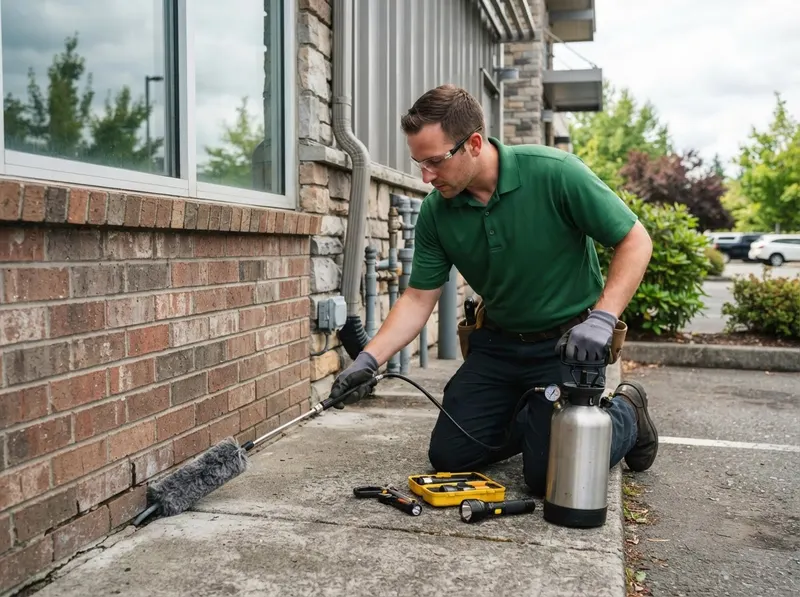
Commercial pest management programs in Bellevue require a disciplined operational approach rather than broadcast pesticide applications. High-density commercial corridors such as Factoria, Crossroads, and Wilburton encounter distinct pest vectors driven by moisture basins, logistics bays, and high-turnover culinary operations. According to integrated pest management standards outlined by the US EPA, facility defense relies primarily on pest exclusion, structural sanitation, and environmental controls before active compounds are considered. In facilities located near wetlands or riparian buffers like the Mercer Slough Nature Park or Kelsey Creek Farm, outdoor rodent activity remains high year-round. Norway rats and roof rats routinely trace underground plumbing conduits and exterior landscaping beds to access structural voids. Redwood Bug Services secures loading docks, roll-up overhead seals, and utility penetrations using quarter-inch wire mesh and architectural sealants conforming to ASTM International physical barrier guidelines.
Facilities serving retail, corporate offices, or food preparation near Bellevue Square and downtown medical plazas must comply with strict commercial health mandates. The Public Health - Seattle & King County agency requires uninterrupted pest mitigation to prevent biological contamination of food supplies and indoor workspaces. A warehouse distribution center in Eastgate requires vastly different tactical protocols than a medical clinic in Newport Shores or an executive office campus in Lakemont. Warehouses mandate heavy interior perimeter trap checks every 14 days under OSHA sanitation guidelines, whereas multi-tenant office suites focus on pantry sanitation, moisture ant monitoring, and eco-conscious vacuum abatement that protects sensitive indoor air quality. In sensitive office environments, low-odor mineral desiccant dusts and insect growth regulators satisfy rigorous building environmental criteria, aligning with USGBC LEED standards for indoor environmental quality.
The commercial decision framework balances operational disruption against pest tolerance thresholds. A single rat sighting inside an active culinary space risks formal closure under FDA HACCP protocols, demanding weekly service intervals, tamper-evident catch boxes, and electronic activity logs. Conversely, a closed corporate headquarters with low pest pressure achieves complete control via monthly external perimeter maintenance and quarterly indoor inspections. The primary trade-off involves routine physical inspection investment versus the catastrophic overhead of regulatory stop-work orders and brand damage. Technicians working under guidelines from the Washington State Department of Agriculture audit building foundations along West Lake Sammamish and hillside office plazas in Cougar Mountain to eliminate harborage conditions, mulch-to-foundation contacts, and unsealed expansion joints before cold weather forces rodents indoors.
Effective commercial protection extends to structural moisture management. Wet Pacific Northwest winters generate saturated crawlspaces and soffits across commercial buildings in Bridle Trails and Enatai, promoting dampwood termites and wood-destroying moisture ants. As detailed by the Washington State University Extension, controlling ambient moisture and eliminating fungal decay takes priority over chemical drenching. Structural remediation involves repairing weeping commercial gutters, re-pitching drainage swales, and sealing crawlspace air seals per U.S. Department of Energy building envelope best practices. Program maintenance records are compiled for commercial compliance, supporting third-party audits under the National Pest Management Association commercial guidelines.
Every job gets a firm, written price after a free on-site visit.
For standards, safe disposal, and service guidance on PEST CONTROL SEVICE in Bellevue, WA, useful references include U.S. EPA, ENERGY STAR, U.S. Dept. of Energy, Consumer.gov, U.S. Census Bureau, and Google Maps. General consumer and small-business resources are available from USA.gov, Better Business Bureau, FTC Consumer Advice, U.S. Small Business Administration, and Ready.gov.
Tell us about your commercial pest management programs job in Bellevue and we'll send a clear, written quote, usually the same day.
 Redwood Bug Services